Showcase
- NZILA Award of Excellence Student — 2026
Nomination statement
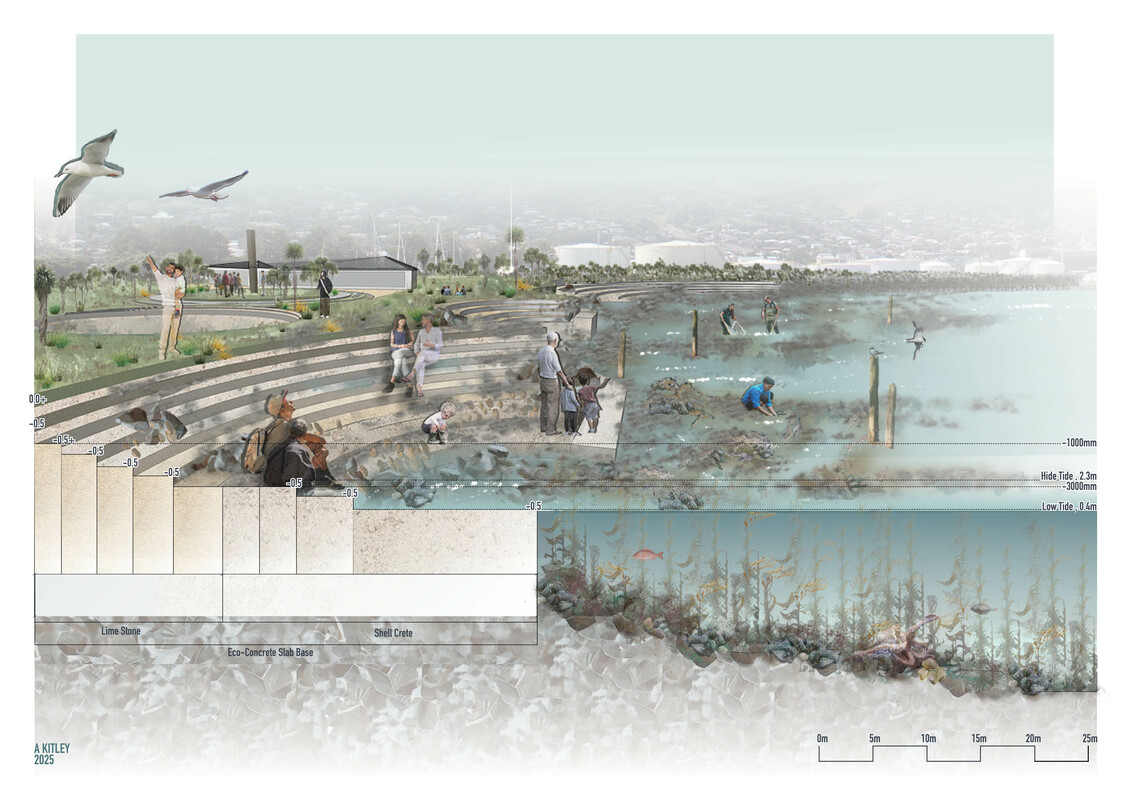
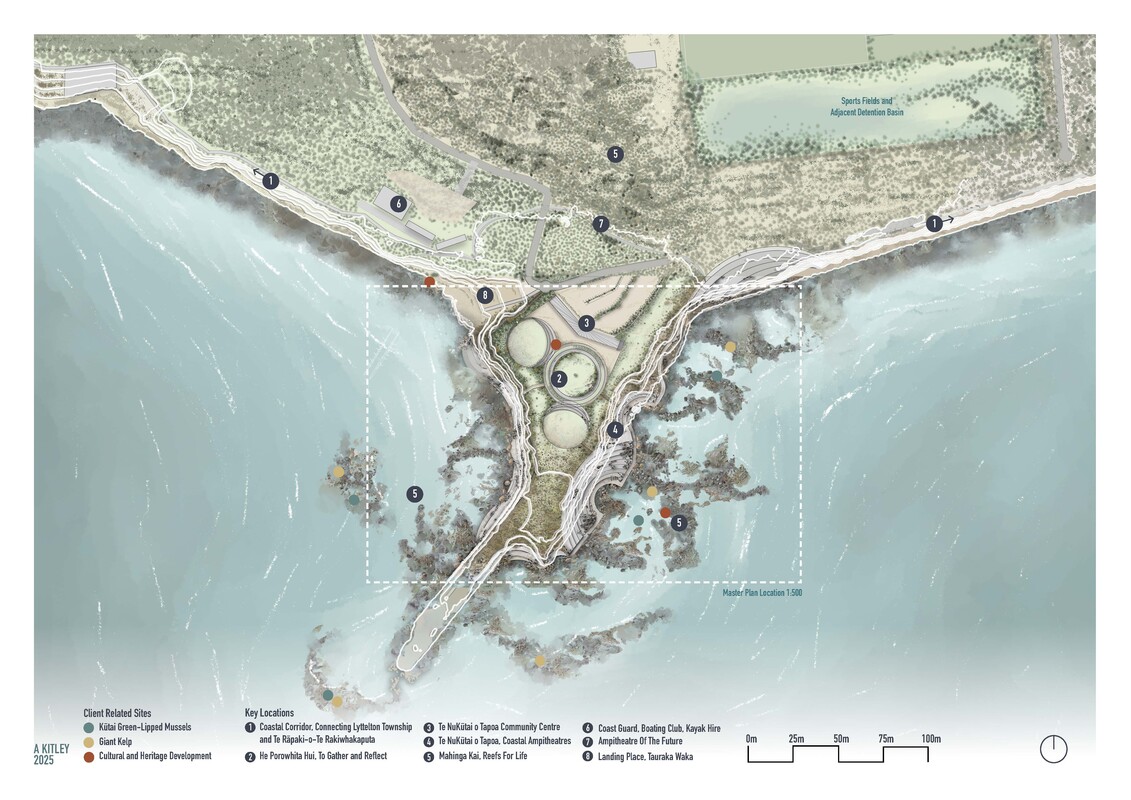
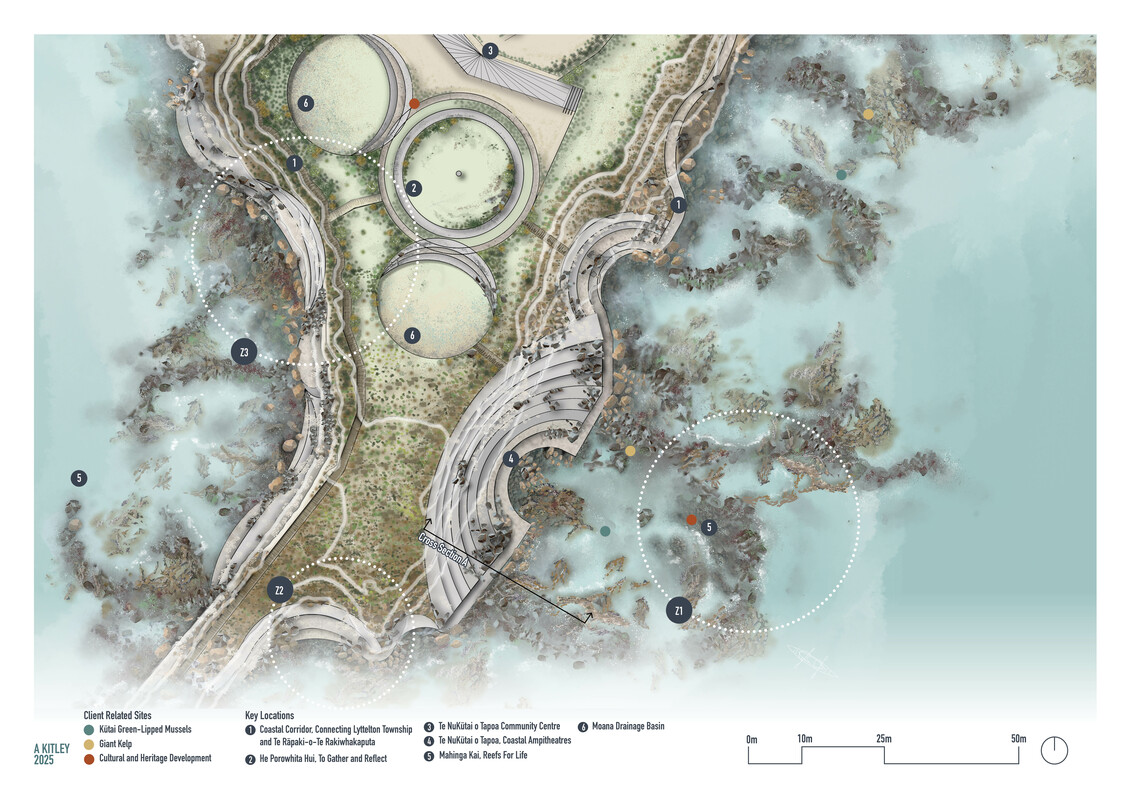
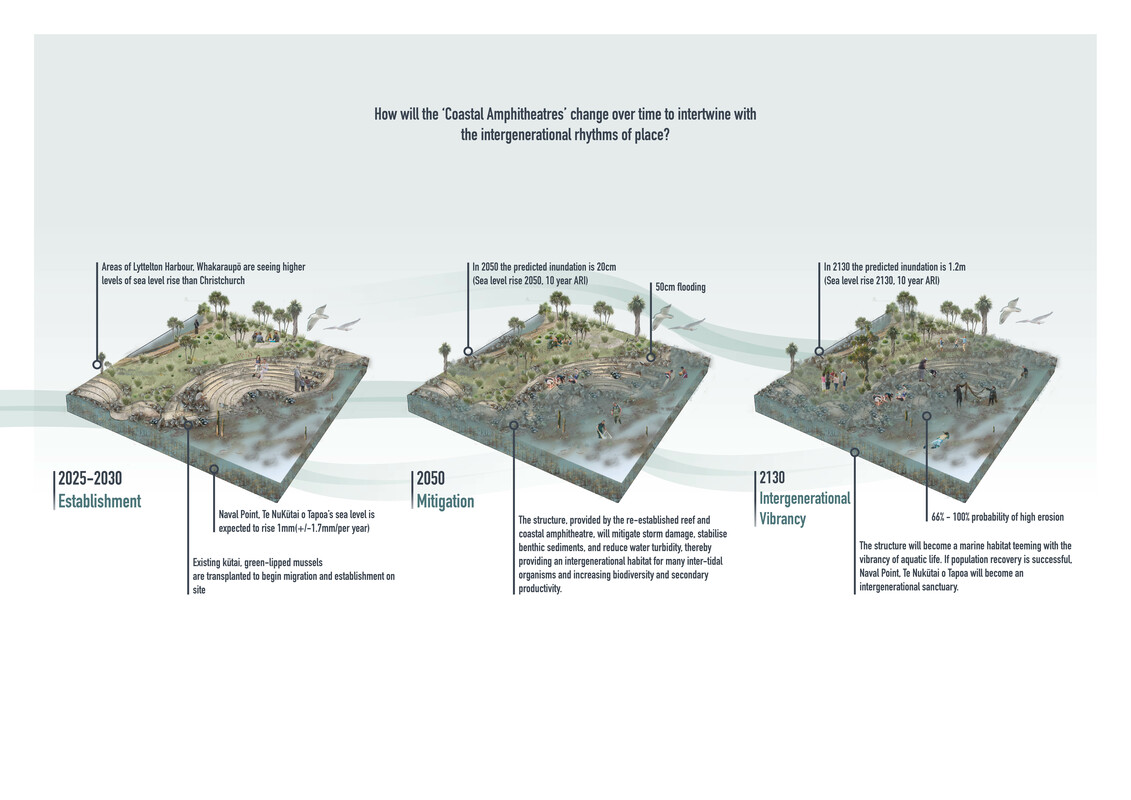
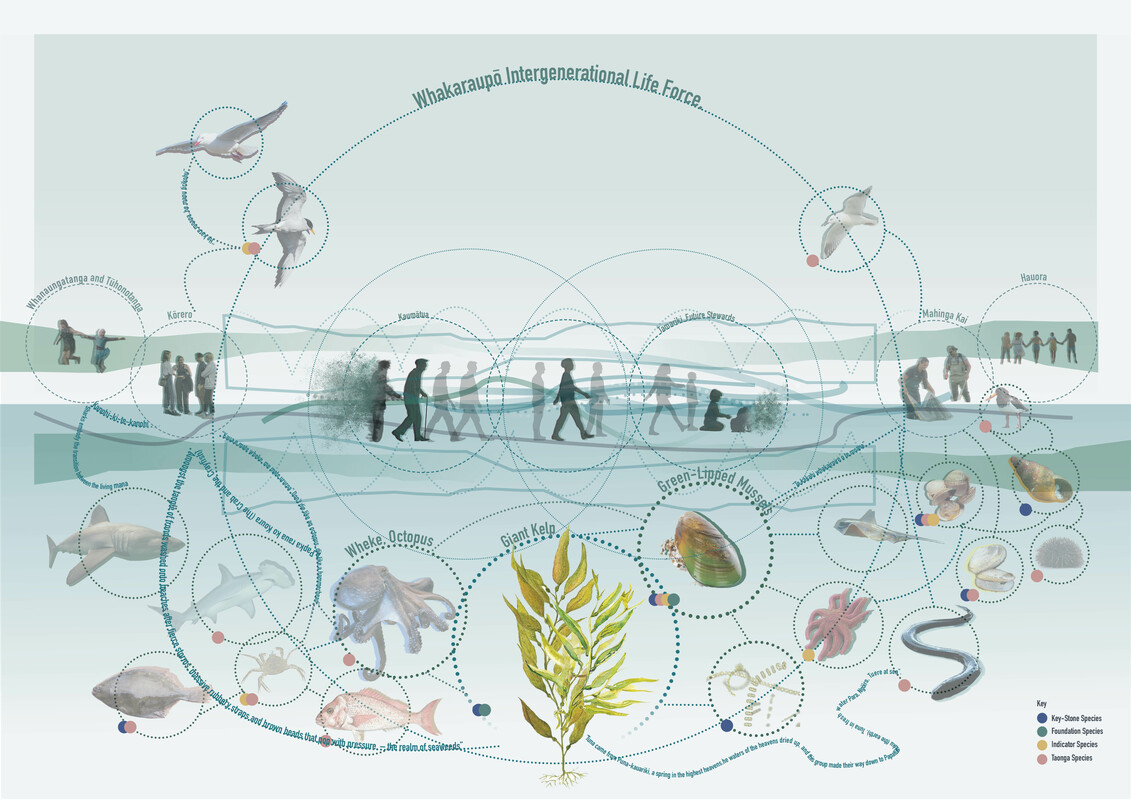
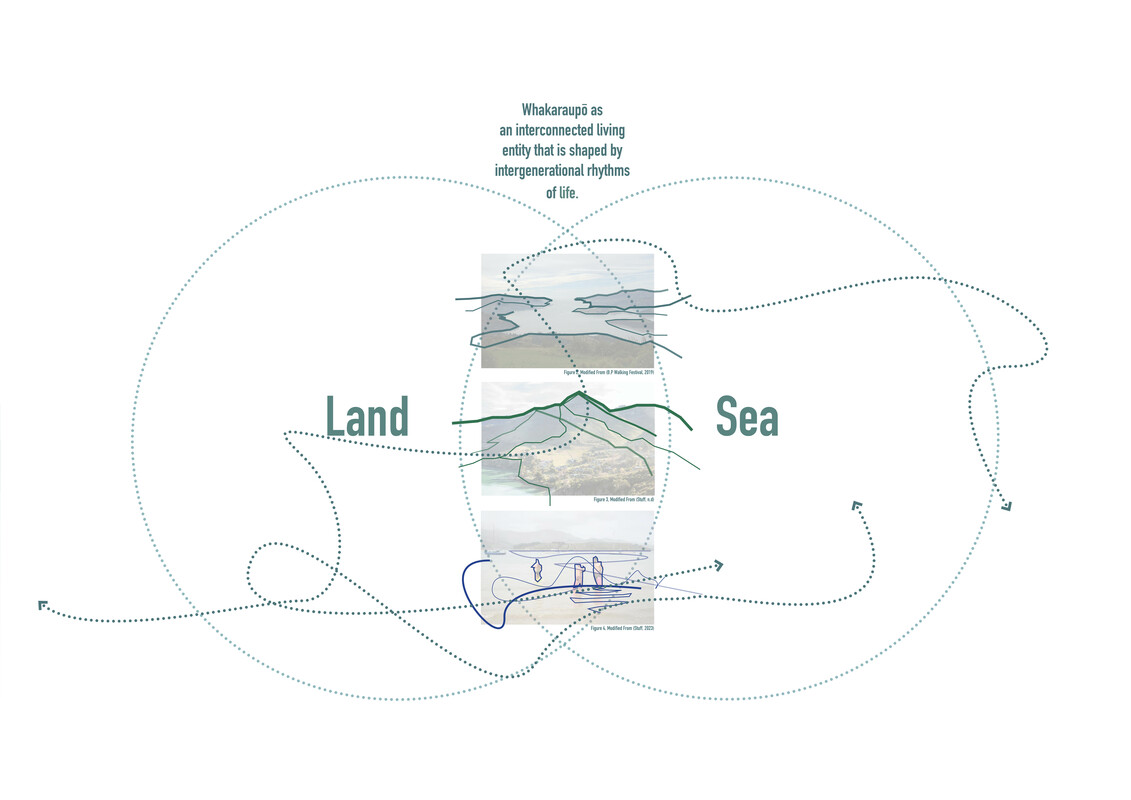
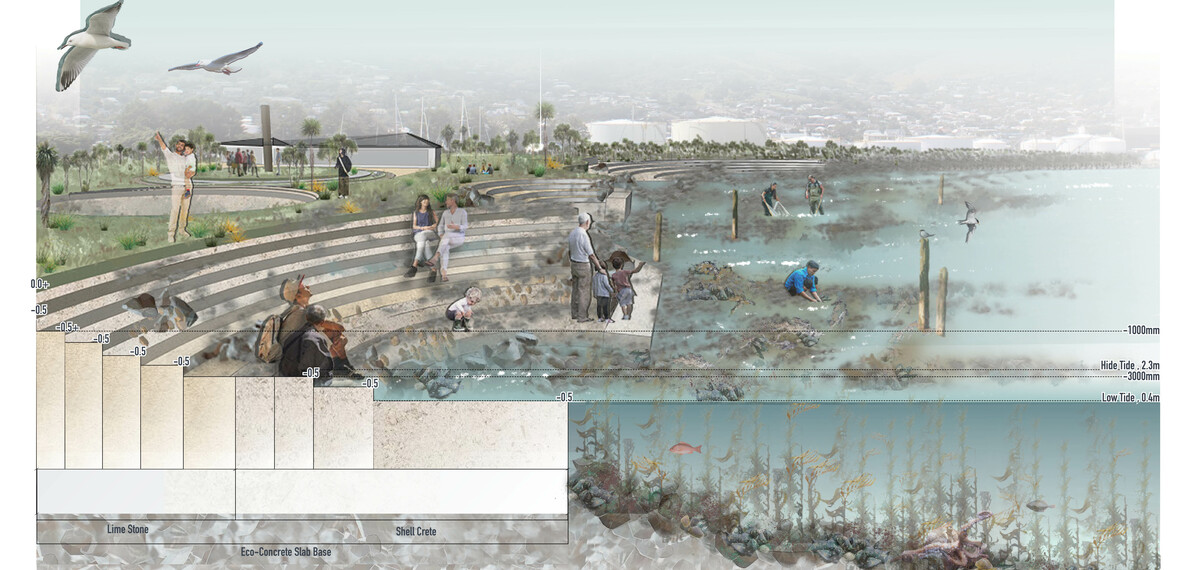
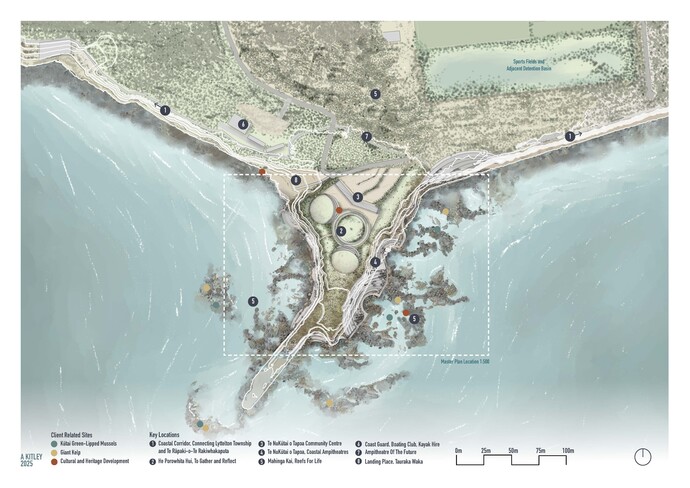
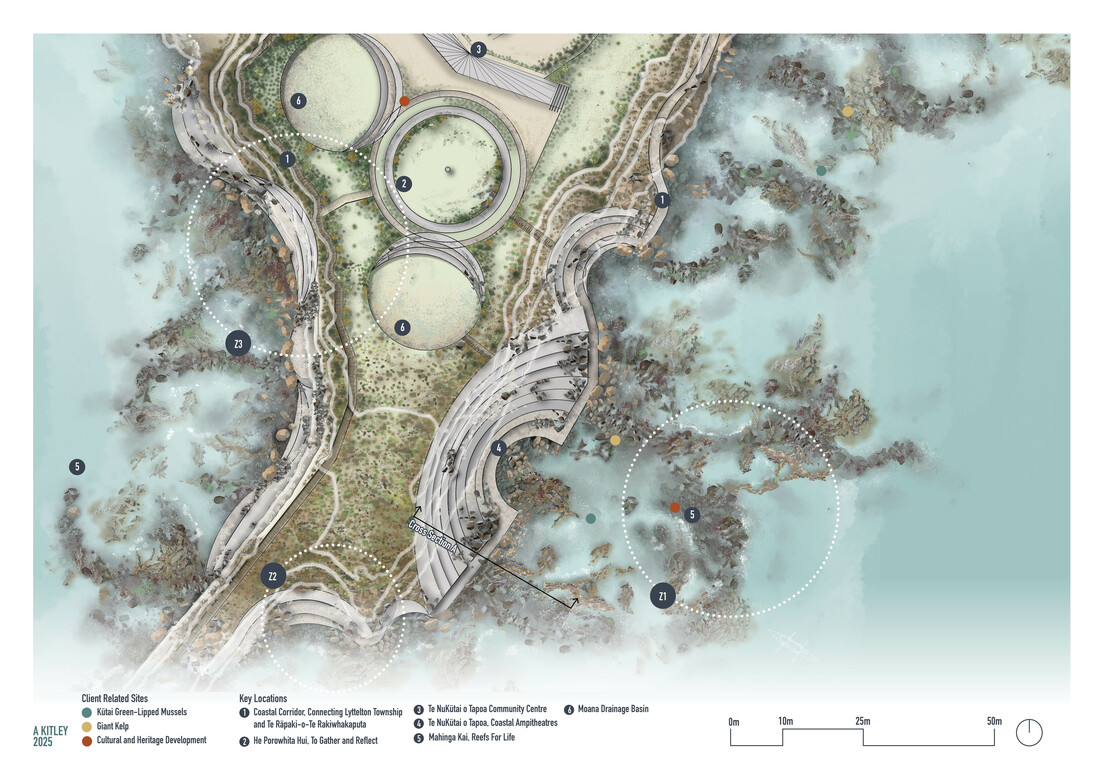
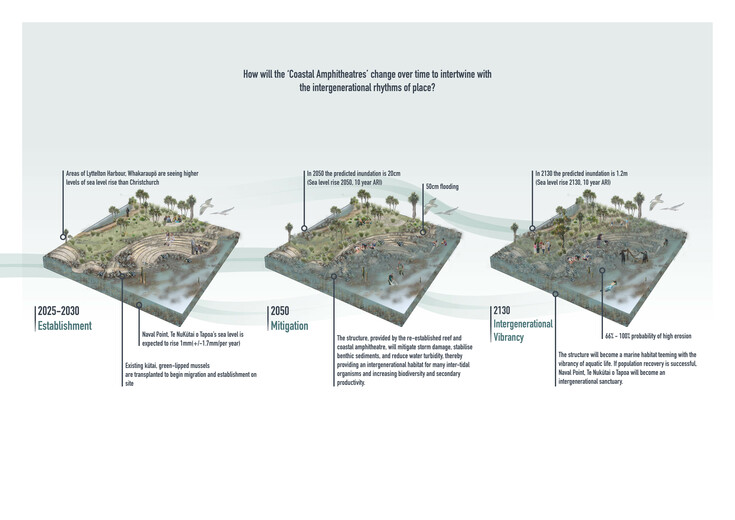
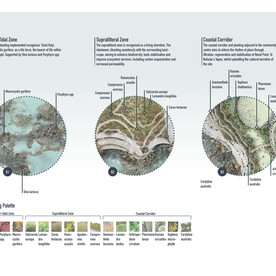
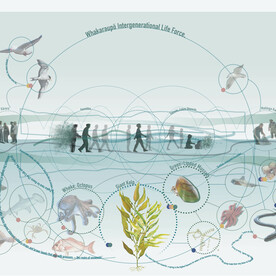
Whakaraupō: Interwoven Rhythms — a Chorus of Life re-imagines Te Nukūtai o Tapoa, Naval Point, as an intergenerational coastal landscape where infrastructure, ecology, and community are interwoven through the rhythms of place. The project proposes the Te Nukūtai o Tapoa Coastal Amphitheatres as a living system that bridges land and sea, blending seamlessly with the surrounding contours. It restores relationships among Ngāti Wheke, the Lyttelton community, and the Whakaraupō environment, fostering play, connection, and strengthened whanaungatanga and tūhonotanga, connections between visitors and the developed reef. The site acknowledges the intergenerational composition of relationships between community and whānau, facilitating spaces that foster mahinga kai, kōrero, and improve community hauora, wellbeing. As time commences, the community will be educated as environmental stewards and kaitiaki of Whakaraupō. The amphitheatres operate as both cultural and ecological infrastructure, adapting over time in response to sea-level rise and environmental change. Through staged development, the site evolves from early ecological establishment to an intergenerational sanctuary through the re-establishment of reef systems and intertidal habitats, supporting kūtai, green-lipped mussels and enhancing mahinga kai practices. Through reframing Te Nukūtai o Tapoa, Naval Point, as a dynamic coastal edge, Whakaraupō will become a place where marine and terrestrial systems coexist, influence, and blend—fostering intergenerational resilience.
Judges' citation
Whakaraupō: Interwoven Rhythms – A Chorus of Life, by Allessandra Kitley, demonstrates a strong conceptual foundation, using an ecological and cultural rhythms-of-place framework to imagine a dynamic, interconnected harbour through interventions at multiple scales. The narrative is well structured and clearly communicated, allowing the reader to understand how the analysis informs the design response from strategy through to detailed site outcomes.
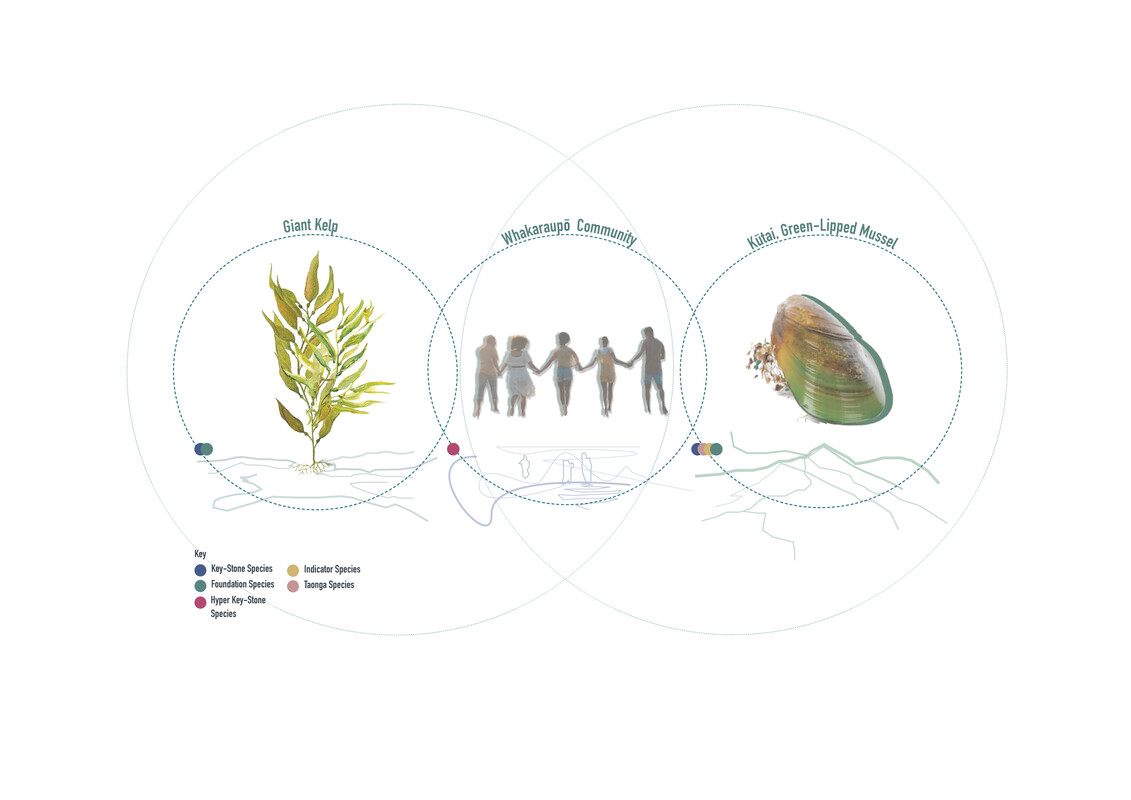
Particularly successful is the way te ao Māori values, environmental stewardship and community aspirations are woven into a coherent vision for Whakaraupō (Lyttelton Harbour) as a living, interconnected system. Giant kelp and kūtai are positioned as foundational clients among the harbour’s flora and fauna, championing environmental stewardship.
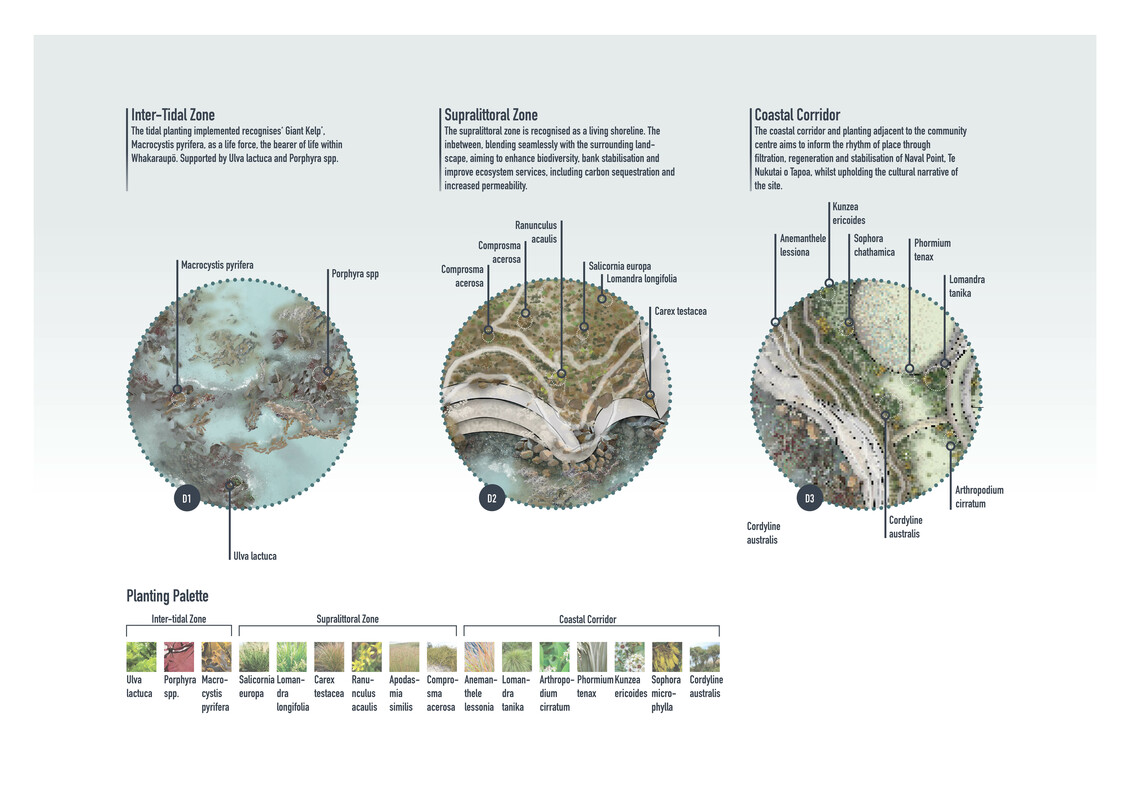
The proposal balances ambitious thinking with practical design moves, creating meaningful relationships between land and sea while responding to future environmental change. The planting strategies, spatial interventions and staged development demonstrate thoughtful consideration of both human and non-human clients.
Overall, this is a mature and thoughtfully resolved project that communicates a compelling design vision with confidence and consistency throughout.
Allessandra Kitley
Lincoln University
All images