Showcase
- NZILA Award of Excellence Student — 2026
Nomination statement
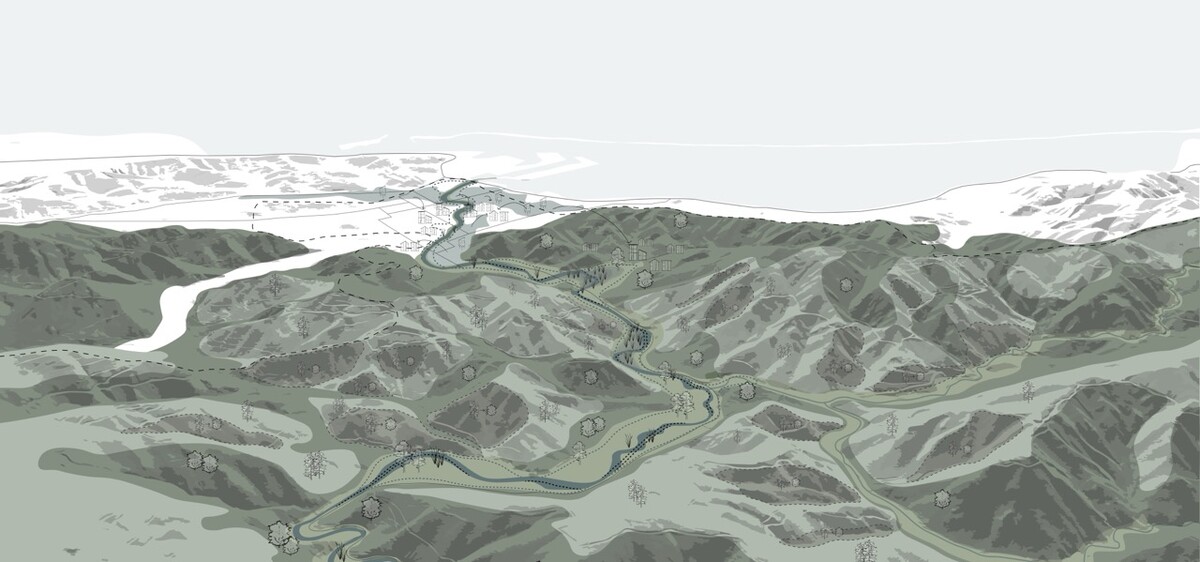
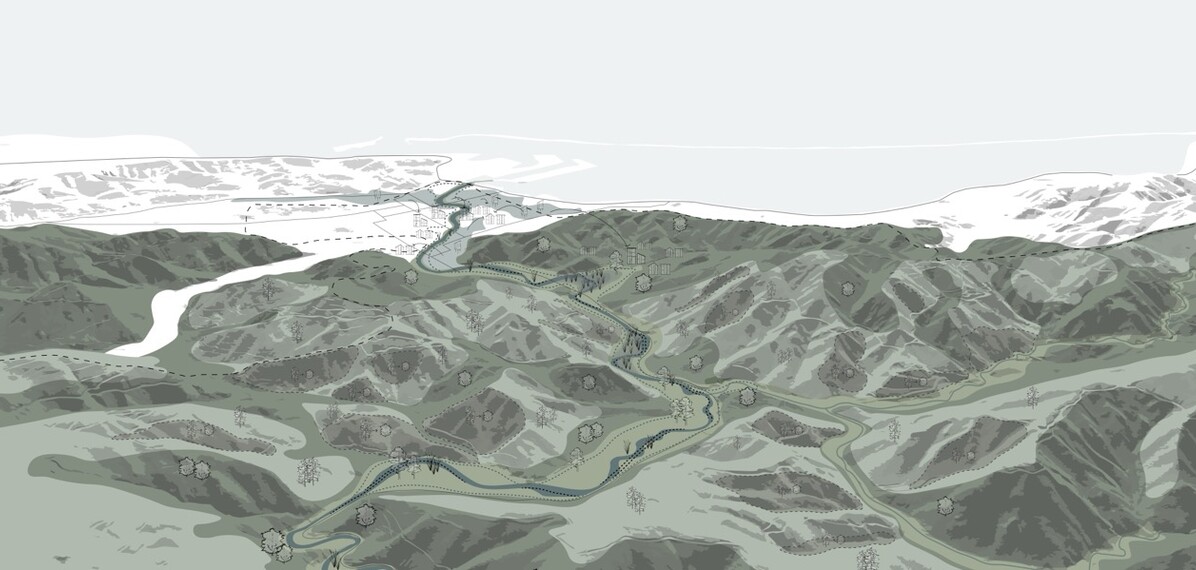
Mahitahi - Weaving Water, Place & People responds to one of Whakatū/Nelson's most pressing challenges: a river system under increasing flood risk, set against projections of 25,000 new homes and a rapidly ageing population over the next thirty years. Rather than treating these as competing pressures, the project weaves them into a single, coherent design vision: to live with the river, not against it. Grounded in four theoretical pillars: He Awa Whiria, Te Ao Māori, Nature-based Solutions, and Biophilic Design. The project spans regional, masterplan, intermediate, and detail scales. At each level, the Mahitahi River is positioned as the primary design driver, granted the status of a living person, whose mauri is to be restored, and rejuvenated. Key moves include terraced and floodable river edges (Te Tūāpapa), a continuous greenway spine, medium-density home clusters supporting climate-driven resettlement, and a connected network of wetlands, rain gardens, and urban ngahere managing stormwater as a living ecological process. At the detail scale, bioengineered habitat systems, riparian planting, and locally sourced materials ground the design in place and cultural identity. The result is a landscape what weaves flood resilience, ecological regeneration, housing growth, and intergenerational wellbeing through the principle the river's name itself embodies: tūpuna and people working as one.
Judges' citation
Mahitahi - Weaving Water, Place & People presents a highly considered response to the challenges of flooding, climate adaptation and urban growth. Centred on the proposition of living with the river rather than against it, the project offers a thoughtful vision for Whakatū Nelson’s future. The judges were impressed by the depth of investigation and the project's ability to work seamlessly across scales, from catchment-wide strategies through to detailed design interventions.
The proposal integrates ecological restoration, flood resilience, housing intensification, public open space and community wellbeing into a cohesive and engaging design narrative. The project demonstrates a sophisticated understanding of landscape as critical infrastructure, allowing natural fluvial processes to occur while maintaining a strong focus on people, place and long-term stewardship.
This work showcases significant design talent and a promising future within the profession. It makes a meaningful contribution to addressing some of the most pressing environmental and community challenges facing towns and cities across Aotearoa.
Josh Whelan
Lincoln University School of Landscape Architecture
All images